
Stanly County Court Records After Arrest
After a Stanly County jail arrest, the sheriff's roster and the court file answer different questions. The roster tells whether the person is currently in Ralph McSwain Detention Center custody and what booking charge or bond information the jail is publishing. The court file shows the formal criminal case pathway: charges as filed or pursued in court, case number, hearing events, attorney or prosecutor involvement, disposition, and financial obligations.
Use Stanly County jail inmate records for custody and booking data. Use court records after a jail arrest when the question is what charge was filed, whether it is pending, dismissed, reduced, superseded, or resolved, and what the next court event is. Booking photos are a separate records issue covered on the Stanly County jail mugshots page.
Find Stanly County Court Records
The North Carolina Judicial Branch says criminal-case information can be accessed through public self-service terminals in clerk offices. Searches can be made by defendant name, case number, victim, or witness. The state also provides Portal services for case information, hearing dates, and payments, while the courthouse terminal and clerk paper file remain important for official county access.
- Search the North Carolina Judicial Branch Portal by defendant name, case number, attorney, citation, or other available field.
- If no case number is known, check hearing searches by party name or use a courthouse terminal.
- Open the case and compare the charge list with the booking charge from the jail profile.
- Check each charge status, hearing date, disposition, judgment, and financial obligation.
- For a certified single-county criminal search, use Form AOC-CR-314 through the Clerk of Superior Court.
The North Carolina court-record access page at nccourts.gov explains courthouse terminals, paper files, and copy access.
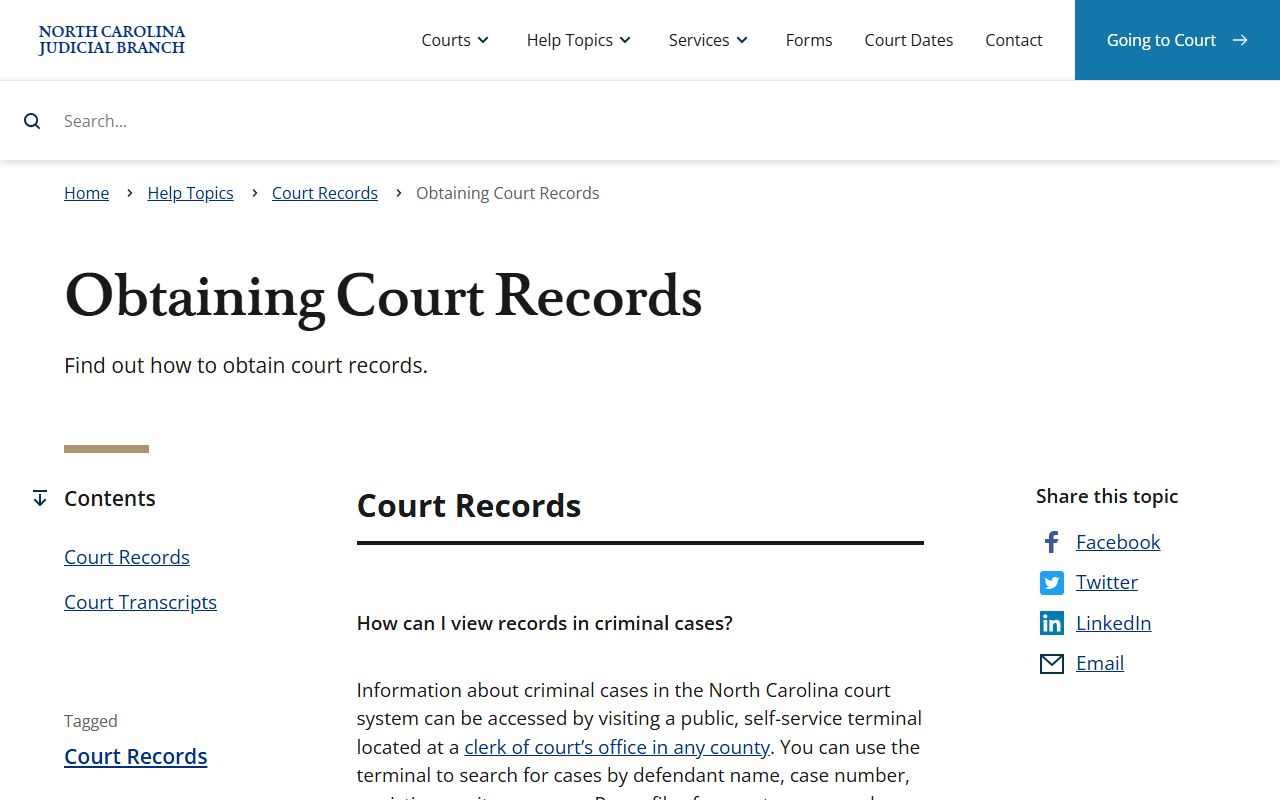
That route is most useful when the jail roster confirms a booking but the formal court record needs a case number or current charge status.
Stanly County Court Search Fields
The researched court access channels include Portal smart search, hearing searches, courthouse terminal searches, and a certified background-check process. Portal can help with public case information, but North Carolina court guidance still points people doing background checks to the county clerk's office rather than relying only on Portal.
| Field or route | Type | Notes |
|---|---|---|
| Portal Smart Search | Text | Search case information by name, case number, attorney, citation, and more. |
| Search Hearings: case number | Text | Useful when the case number is known from court papers. |
| Search Hearings: party name | Text | Useful after arrest when no case number is known. |
| Attorney or bar number | Text/filter | Useful when counsel is known. |
| Courthouse terminal | Terminal search | NC Courts says searches may use defendant, case, victim, or witness names. |
| AOC-CR-314 | Certified paper process | Single-county certified criminal record check with $25 fee. |
Charges After a Stanly Arrest
The arrest-to-court path starts with booking at Ralph McSwain Detention Center, then moves to a magistrate and release-condition process. The District Attorney reviews law-enforcement materials and decides how charges proceed. Misdemeanors may proceed in district court, while felonies may move through probable-cause and superior court indictment or information processes. The jail's charge wording can differ from the final court charge.
| Document | How it works | Why it matters |
|---|---|---|
| Complaint or warrant | Accusation tied to the arrest or initial process | May begin the court case after booking. |
| Information | Prosecutor-filed charging document in appropriate cases | Can move a charge into formal prosecution. |
| Indictment | Grand-jury accusation, often in felony matters | May replace, add to, or supersede earlier charge wording. |
Stanly County Charge Status
Charge status can change several times after an arrest. A booking profile may show a charge code, description, and bond amount, but the prosecutor can amend, reduce, dismiss, supersede, indict, or decline a charge. Later court records show hearings, continuances, judgments, probation, fines, fees, and custody commitments.
| Status | What it means |
|---|---|
| Pending | The case or charge is still active. |
| Dismissed | The state or court ended that charge without conviction. |
| Reduced or amended | The formal charge changed from the booking or original charge. |
| Superseding indictment | A later indictment replaces or adds to an earlier pleading. |
| Deferred prosecution | The case may resolve without an ordinary conviction if conditions are met. |
| Convicted or responsible | A final adjudication occurred against the defendant. |
| Not guilty or acquitted | The charge resolved in the defendant's favor. |
Bond After Stanly County Arrest
Stanly's official detention policies page lists three local ways to post bond: hire a bail bondsman, post a cash bond, or post a property bond. The page says a bondsman's fee is typically 15% of the total bond. For a property bond over $4,999.00, the person posting bond must hire an attorney to prepare a deed of trust. Current bond stipulations should be confirmed by calling 704-986-3858 because holds, writs, or transfer issues can block release.
| Bond or release path | Stanly / North Carolina detail |
|---|---|
| Cash bond | Listed by Stanly as one local posting option. |
| Bail bondsman / surety | Stanly says the typical fee is 15% of total bond. |
| Property bond | Allowed locally; over $4,999 requires attorney-prepared deed of trust. |
| Unsecured appearance bond | Authorized by N.C. G.S. 15A-534. |
| Hold or detainer | Another agency hold can keep a person in custody despite local bond. |
Warrants and Stanly Arrest Records
No official searchable Stanly County active-warrant database was located in the sheriff pages inspected. The sheriff website has Most Wanted and Submit A Tip features, but those are not the same as a full public warrant search. When a person is arrested on a warrant and booked into the jail, the roster may show a charge and bond, but it did not show warrant number, issuing court, or arresting agency in the inspected sample.
For warrant-related routing, call the sheriff main office at 704-986-3714, booking at 704-986-3739, or the booking desk at 704-986-3858 if the person may already be in custody. For court dates, case numbers, failure-to-appear status, and formal court records after an arrest, use Portal, courthouse terminals, or the Stanly County Courthouse main phone at 704-986-7000.
Charges vs Convictions
An arrest and charge are not the same as a conviction. Court records after a jail arrest may show an accusation before guilt is decided. The final court outcome can be dismissal, reduction, plea, trial verdict, conditional discharge, probation, or another result. Use the disposition and judgment fields, not the booking charge alone, to understand the final case status.
| Charge | Conviction | |
|---|---|---|
| Stage | Accusation after arrest or filing | Final adjudication by plea, verdict, or judgment |
| Record source | Jail roster and court case can both show it | Court judgment and related state records |
| Can change | May be amended, reduced, dismissed, or superseded | Can be appealed or later affected by expunction rules |
Sealed Expunged Arrest Records
North Carolina public access is broad, but sealed, expunged, juvenile, medical, security, and protected law-enforcement records may be withheld. Stanly research did not locate a sheriff mugshot-removal policy. If a charge is dismissed, expunged, or sealed, the court process is the main route, then any remaining local public page should be handled by giving the sheriff the court order.
| Sealed or restricted | Expunged | |
|---|---|---|
| Public visibility | Hidden or limited by law or court order | Removed from ordinary public access under the order |
| Route | Depends on the record type and order | Handled through North Carolina court procedures |
| Jail impact | May require agency review | Provide the court order if a local record remains online |
Certified Stanly Background Checks
NC Judicial Branch says a certified single-county criminal record search is requested through the Clerk of Superior Court office using Form AOC-CR-314 and a $25 fee. Mail payment accepts money order or certified check, not personal check. In person, credit card, cash, money order, or certified check are accepted. Public courthouse computers also allow self-service non-certified searches statewide without charge, though printing charges may apply.
The official criminal background check instructions at nccourts.gov explain the AOC-CR-314 single-county certified search process and fee.
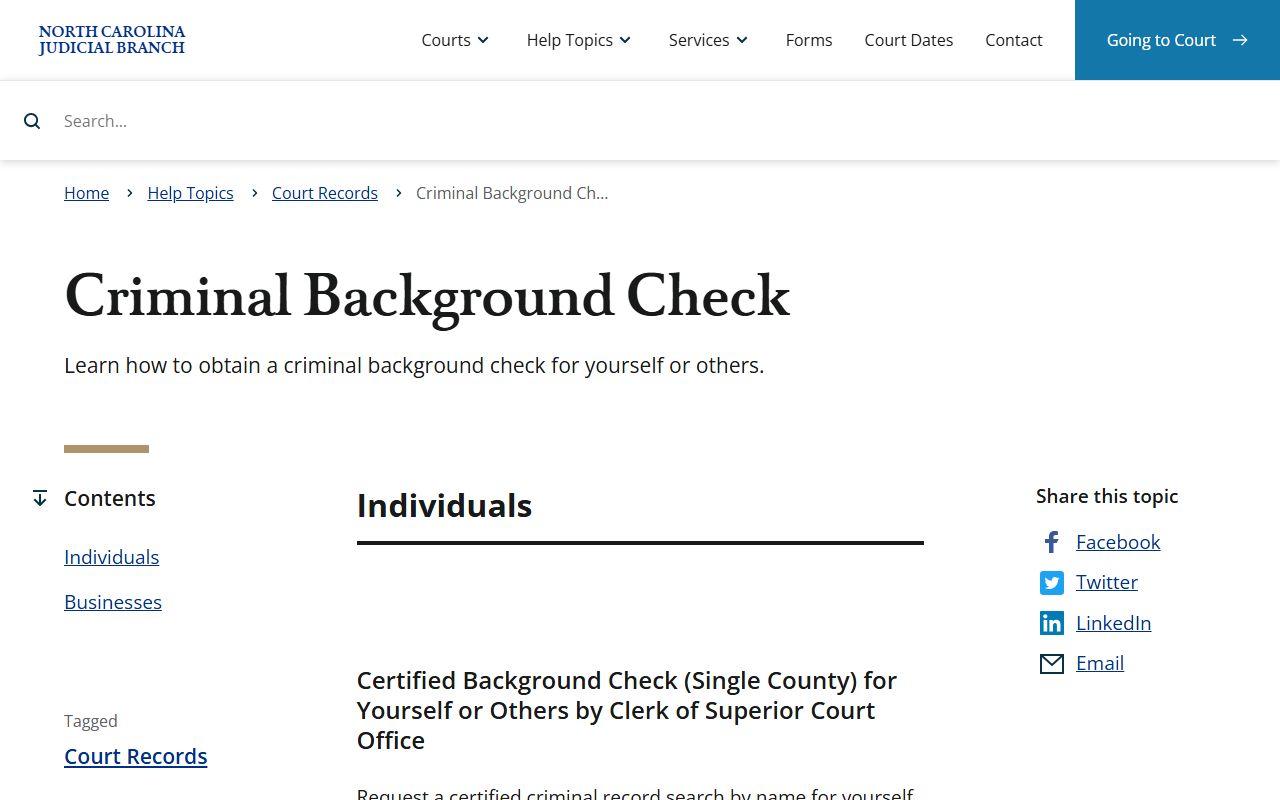
Certified checks are different from casual court-record lookup because they are requested through the clerk and carry an official certification process.
Important: This resource is not a consumer reporting agency and must not be used for FCRA-covered screening decisions.
Restricted Stanly Court Records
Some court records after an arrest may not be available to the general public. North Carolina public records law protects criminal investigation and intelligence records, and other laws or court orders can restrict juvenile records, sealed records, expunged records, medical details, victim-protective data, and security-sensitive information. A missing online record does not always mean no arrest occurred. It can mean the case is not entered yet, is restricted, is in another county or court system, or has moved into a nonpublic status.